
Holistic Nutrition


- Description
- Curriculum
- FAQ
- Reviews
- Grade
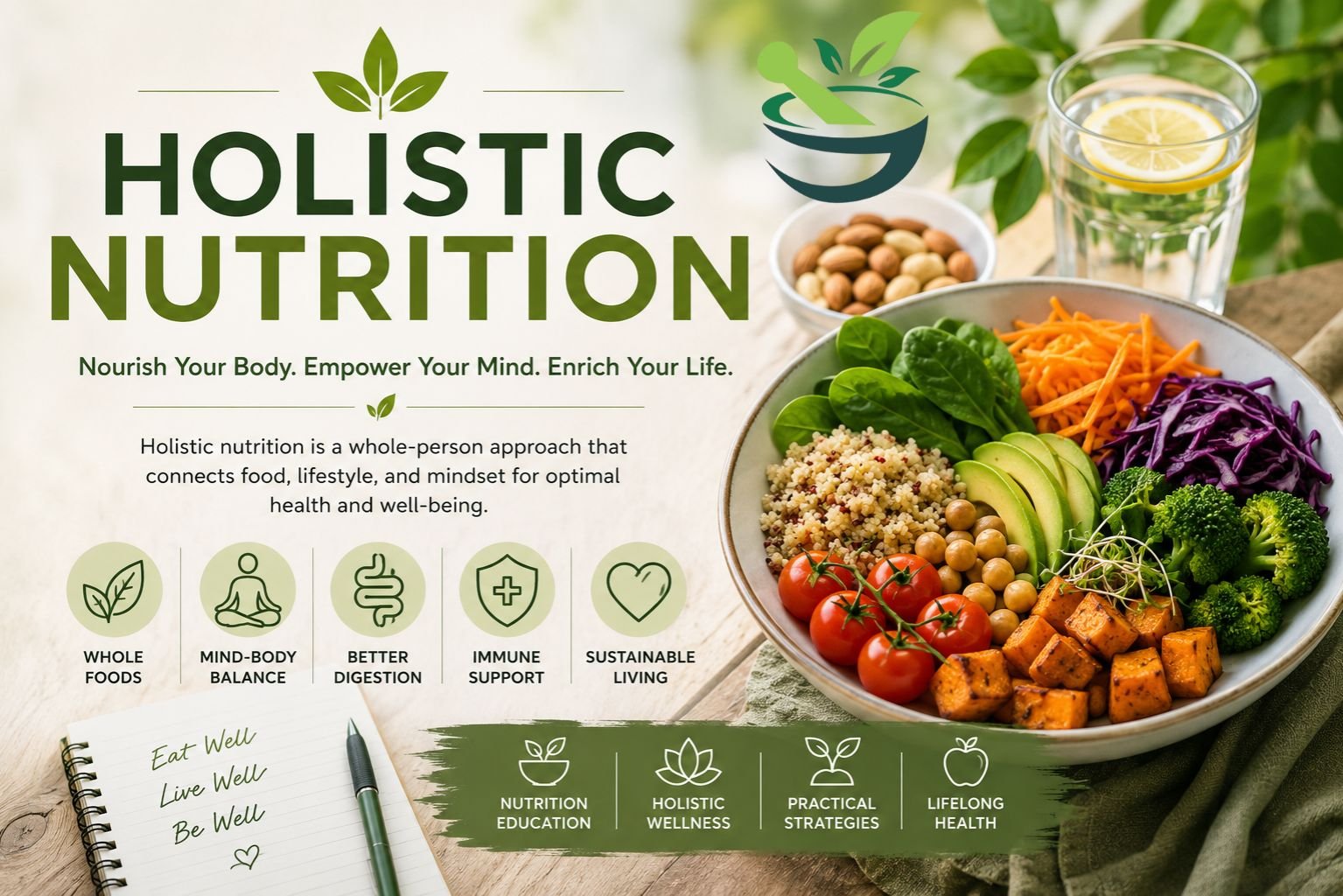
Holistic Nutrition: Nourish Mind Body and Life
Holistic nutrition is a whole person approach to wellness that connects food, lifestyle, and mindset. By choosing nutrient dense, minimally processed foods and supportive daily habits, you can build steady energy, balanced metabolism, and a resilient gut and immune system. Create a sustainable routine that honors your unique needs.
Why Holistic Nutrition Works
- Steady energy and fewer cravings
- Stronger gut health and digestion
- Immune support and reduced inflammation
- Healthy weight and body composition
- Clearer skin and brighter mood
- Sharper focus and better sleep
Core Principles
- Whole foods first: vegetables, fruits, legumes, lean proteins, nuts, seeds, whole grains
- Balance your plate: protein, colorful plants, smart carbs, healthy fats
- Eat the rainbow to cover micronutrient needs
- Mindful eating: slow down and tune into hunger and fullness
- Hydration: water, herbal infusions, citrus, and a pinch of sea salt
- Sleep and stress care: consistent routines, breathwork, sunlight, and nature breaks
- Gentle movement most days: walking, strength, and mobility
- Personalization: adjust to goals, culture, season, and activity level
Sample Day on a Plate
Breakfast: oats with berries, chia, and cinnamon. Lunch: quinoa bowl with greens, roasted vegetables, chickpeas, and tahini. Snack: apple with almond butter. Dinner: salmon or lentil stew with leafy greens and olive oil.
Start today: plan simple meals, shop the perimeter, prep once, and build one habit each week. Holistic nutrition helps you feel vibrant, focused, and strong.
-
1
 Program overview
This 12-week self-paced certificate empowers learners to explore holistic nutrition through guided readings, interactive exercises, and self-assessment quizzes. Learners progress independently, with optional support from facilitators or mentors when clarification is needed
-
2
Introduction
The module emphasizes practical application by connecting theory to everyday Ghanaian foods and encouraging reflective activities that build nutritional awareness.
-
3
Unit 1: Human Nutrition
🎯 Learning Objectives
By the end of this unit, learners will be able to:
- Define human nutrition and explain its scope.
- Describe the role of nutrition in growth, energy, and disease prevention.
- Identify key functions of nutrients in the body.
- Recognize the importance of nutrition in holistic healthcare. -
4
 Assignment
 -
5
Unit 2: Macronutrients
🎯 Learning Objectives
By the end of this unit, learners will be able to:
- Define macronutrients and explain why they are essential.
- Describe carbohydrate functions and sources.
- Explain protein roles in growth and repair.
- Identify fat functions and healthy sources.
- Recognize deficiencies and excesses. -
6
Assignment
-
7
Unit 3: Vital Helpers
🎯 Learning Objectives
By the end of this unit, learners will be able to:
- Define micronutrients and explain their role in health.
- Differentiate vitamins and minerals.
- Identify sources of key vitamins and minerals.
- Recognize deficiency signs and excesses.
- Explain their role in body regulation and protection. -
8
Assignment
-
9
Unit Four: Functions of Nutrients
🎯 Learning Objectives
By the end of this unit, learners will be able to:
- Explain energy functions of carbohydrates, proteins, and fats.
- Describe growth and repair roles in tissues and organs.
- Identify regulatory functions of vitamins, minerals, and water.
- Recognize protective roles in immunity and disease prevention. -
10
Assignment
-
11
Unit Five: Nutrient Sources in Local Foods
🎯 Learning Objectives
By the end of this unit, learners will be able to:
- Identify local food sources for macronutrients and micronutrients.
- Classify foods into carbohydrates, proteins, fats, vitamins, and minerals.
- Explain the importance of using local foods for balanced diets.
- Recognize deficiency prevention through diverse food choices. -
12
Assignment
-
13
Unit 6: Nutrient Deficiencies and Excesses
🎯 Learning Objectives
By the end of this unit, learners will be able to:
- Define nutrient deficiency and excess.
- Identify common deficiencies and their signs.
- Explain health risks linked to overconsumption.
- Recognize local examples in Ghanaian diets.
- Suggest prevention strategies through balanced eating. -
14
Assignment
-
15
Unit Serven:
🎯 Learning Objectives
By the end of this unit, learners will be able to:
- Define a balanced diet and explain its components.
- Identify food groups and their roles.
- Explain portion control and moderation.
- Recognize hydration importance in nutrition.
- Apply balanced diet principles to local Ghanaian meals. -
16
Assignment
-
17
References
Module 1: Basic Human Nutrition, with chapters and page ranges cited from authoritative textbooks and guidelines. This is formatted for academic use and student assignments.
-
18
 Module 1 Final Quiz
-
19
Module Description
🎯 Learning Outcomes
By the end of this module, learners should be able to:
- Conduct basic assessments using intake forms.
- Identify deficiencies and imbalances.
- Evaluate dietary habits and lifestyle patterns.
- Interpret measurements like BMI and waist‑to‑hip ratio.
- Analyze case studies to identify nutrition problems.
- Develop recommendations for clients. -
20
Unit1: Introduction to Nutritional Assessment
🎯 Learning Objectives
By the end of this unit, learners will be able to:
- Define nutritional assessment and explain its importance.
- Identify components of a complete assessment.
- Understand its role in holistic healthcare.
- Practice intake forms for self or client evaluation. -
21
Assignment
-
22
Unit 2: Dietary Assessment Methu
🎯 Learning Objectives
By the end of this unit, learners will be able to:
- Explain dietary assessment and their purpose.
- Use 24‑hour recall to record food intake.
- Apply food frequency questionnaires to identify eating patterns.
- Maintain food diaries for self‑reflection.
- Analyze meal patterns and detect unhealthy eating habits. -
23
Practical Activity
-
24
Practice Case Study – Digestive Complaint
📖 Case Scenario
Kwame is a 35‑year‑old office worker in Accra. He reports frequent bloating, constipation, and occasional stomach cramps. -
25
Unit 3: Digestion, Absorption & Gut Health
🎯 Learning Objectives
By the end of this unit, learners will be able to:
- Describe the digestive system and its processes.
- Explain nutrient absorption and how food is converted into energy.
- Understand gut microbiome and its role in health.
- Identify digestive disturbances and their causes.
- Recommend gut‑friendly foods including probiotics and prebiotics. -
26
Practical Activity
-
27
Unit 4: Hydration and Lifestyle Factors
🎯 Learning Objectives
By the end of this unit, learners will be able to:
- Explain the role of water in body functions.
- Identify signs of dehydration and its effects.
- Choose healthy beverages for daily hydration.
- Evaluate lifestyle factors such as sleep, stress, physical activity, and toxins.
- Reflect on personal habits through journaling and self‑assessment. -
28
Quiz – Module 2
-
29
Introduction
📖 Module Description
This module introduces learners to the biochemical foundations of nutrition. It explains how nutrients are metabolized in the body, the role of enzymes and hormones in regulating metabolism, and how biochemical imbalances contribute to disease. Learners will explore the pathways of energy production, nutrient utilization, and detoxification, with emphasis on how these processes support holistic health. -
30
Unit 1 : Introduction to Nutritional Biochemistry.
🌱 Definition of Nutritional Biochemistry
- Nutritional biochemistry is the study of how nutrients interact with biological systems at the molecular and cellular level.
- It connects nutrition (what we eat) with biochemistry (the chemical processes in living organisms).
- Focuses on how macronutrients (carbohydrates, proteins, fats) and micronutrients (vitamins, minerals) are digested, absorbed, metabolized, and utilized. -
31
Assignment
-
32
Unit 2: Nutrients and Their Biochemical Roles
UNIT 2: NUTRIENT BIOCHEMISTRY
Expanded Learning Outcomes and Study Resources
By the end of this unit, students should be able to:
-
Identify macronutrients and micronutrients and explain their biochemical roles.
-
Explain how nutrients are digested, absorbed, transported, stored, and metabolized.
-
Describe how the body regulates nutrient levels.
-
Recognize the effects of nutrient deficiency and nutrient toxicity.
-
Apply knowledge of nutrient biochemistry to health, disease, nutrition, and naturopathic practice.
-
Explain the relationship between nutrition, energy production, growth, repair, and body regulation.
-
Interpret simple food labels and identify important nutrients in common foods.
-
Develop basic nutrition-support plans using locally available foods.
-
Explain why a balanced diet is generally safer than excessive reliance on supplements.
-
Recognize situations where professional nutrition or medical advice is required.
1. Understanding Nutrients
Nutrients are substances found in food that the body needs to function properly.
They help the body to:
-
Produce energy.
-
Build and repair tissues.
-
Support growth and development.
-
Maintain healthy bones and muscles.
-
Support the immune system.
-
Regulate body temperature.
-
Produce hormones and enzymes.
-
Maintain healthy blood.
-
Protect cells from damage.
Nutrients are divided into two main groups:
1.1 Macronutrients
Macronutrients are nutrients required in relatively large amounts.
The three main macronutrients are:
-
Carbohydrates
-
Proteins
-
Fats
Water is also required in large amounts and is essential for life.
Carbohydrates
Carbohydrates are an important source of energy.
Examples include:
-
Rice
-
Maize
-
Yam
-
Cassava
-
Plantain
-
Bread
-
Potatoes
-
Fruits
The body breaks many carbohydrates down into glucose. Glucose can be used by cells to produce energy.
Proteins
Proteins are needed for:
-
Growth.
-
Muscle development.
-
Tissue repair.
-
Enzyme production.
-
Hormone production.
-
Immune function.
Examples include:
-
Beans
-
Fish
-
Eggs
-
Meat
-
Milk
-
Groundnuts
-
Soybeans
-
Lentils
Proteins are made up of smaller units called amino acids.
Fats
Fats are needed for:
-
Energy storage.
-
Cell membrane formation.
-
Hormone production.
-
Absorption of vitamins A, D, E, and K.
-
Insulation and protection of organs.
Examples include:
-
Avocado
-
Groundnuts
-
Vegetable oils
-
Seeds
-
Fatty fish
-
Coconut
-
Shea butter
Fats should not be completely avoided because the body needs certain fats for normal functioning.
2. Micronutrients
Micronutrients are needed in smaller amounts but are still essential for health.
They include:
-
Vitamins
-
Minerals
Micronutrients do not usually provide energy directly. Instead, they help the body use macronutrients and regulate important processes.
2.1 Vitamins
Vitamins are organic substances required for normal body functions.
They are divided into two groups.
Fat-Soluble Vitamins
These include:
-
Vitamin A
-
Vitamin D
-
Vitamin E
-
Vitamin K
They can be stored in body fat and the liver.
Because they can accumulate, excessive supplementation may cause toxicity.
Water-Soluble Vitamins
These include:
-
Vitamin B-complex
-
Vitamin C
Most water-soluble vitamins are not stored in large amounts. They generally need to be consumed regularly.
Vitamin B12 is an important exception because the body can store it for a considerable period.
2.2 Minerals
Minerals are inorganic elements needed for body functions.
Examples include:
-
Calcium
-
Iron
-
Magnesium
-
Potassium
-
Zinc
-
Iodine
-
Sodium
-
Phosphorus
Minerals support:
-
Bone formation.
-
Blood production.
-
Nerve function.
-
Muscle contraction.
-
Fluid balance.
-
Immune function.
-
Thyroid activity.
3. Biochemical Roles of Nutrients
Biochemistry is the study of the chemical processes that occur in living organisms.
Nutrients participate in many biochemical processes.
3.1 Nutrients as Sources of Energy
Carbohydrates, fats, and proteins can provide energy.
The body converts nutrients into usable energy through chemical reactions.
A major energy-carrying molecule is called ATP, which means adenosine triphosphate.
ATP supplies energy for activities such as:
-
Muscle contraction.
-
Nerve transmission.
-
Movement.
-
Active transport across cell membranes.
-
Building new molecules.
-
Tissue repair.
Practical Example
When a person walks, muscle cells require ATP to contract.
The body produces ATP using nutrients obtained from food.
3.2 Nutrients as Building Materials
Some nutrients provide materials for constructing and repairing the body.
Examples include:
-
Amino acids from proteins help repair muscles.
-
Calcium and phosphorus support bones and teeth.
-
Fatty acids help form cell membranes.
-
Iron is needed to produce hemoglobin.
-
Zinc supports growth and wound healing.
Practical Example
A person recovering from an injury may require adequate protein, vitamins, minerals, and energy to support tissue repair.
3.3 Nutrients as Regulators
Some nutrients help control body processes.
Examples include:
-
Iodine supports thyroid hormone production.
-
Calcium helps regulate muscle contraction and nerve activity.
-
Vitamin K supports normal blood clotting.
-
Magnesium participates in many enzyme reactions.
-
B vitamins help enzymes release energy from food.
4. Digestion, Absorption, and Metabolism
Students should understand that eating food is only the beginning of nutrition.
The body must process nutrients before cells can use them.
The main stages are:
-
Digestion
-
Absorption
-
Transport
-
Storage
-
Metabolism
-
Elimination
4.1 Digestion
Digestion is the process of breaking food into smaller substances that the body can absorb.
Examples:
-
Carbohydrates are broken down into simple sugars.
-
Proteins are broken down into amino acids.
-
Fats are broken down into fatty acids and other smaller substances.
Practical Example
When a person eats beans, the digestive system breaks down the proteins and carbohydrates so that the body can use them.
4.2 Absorption
Absorption is the movement of digested nutrients from the digestive tract into the blood or lymph.
Most nutrient absorption occurs in the small intestine.
Practical Example
After eating an orange, vitamin C and other nutrients are absorbed through the digestive system and transported to body tissues.
4.3 Transport
After absorption, nutrients are transported to different parts of the body.
The blood carries many nutrients to:
-
Muscles.
-
The brain.
-
The liver.
-
The kidneys.
-
Bones.
-
Other tissues.
Some fats are transported through the lymphatic system before entering the bloodstream.
4.4 Storage
The body stores some nutrients for later use.
Examples include:
-
Glycogen stored in the liver and muscles.
-
Fat stored in adipose tissue.
-
Iron stored in certain body proteins.
-
Vitamin A stored in the liver.
-
Vitamin B12 stored in the liver.
Practical Example
If a person eats more carbohydrate than the body immediately needs, some of it can be stored as glycogen.
4.5 Metabolism
Metabolism refers to all the chemical reactions that occur in the body.
It includes two major processes.
Catabolism
Catabolism is the breakdown of substances to release energy or produce smaller molecules.
Example:
-
Breaking down glucose to produce ATP.
Anabolism
Anabolism is the building of larger molecules from smaller ones.
Examples include:
-
Building muscle proteins from amino acids.
-
Building glycogen from glucose.
-
Producing new cell components.
Easy Way to Remember
Catabolism = breaking down
Anabolism = building up
5. Regulation of Nutrients
The body attempts to keep internal conditions stable. This is called homeostasis.
Nutrient regulation involves hormones, organs, enzymes, and feedback systems.
5.1 Blood Glucose Regulation
Glucose is an important source of energy.
Two important hormones are:
-
Insulin
-
Glucagon
Insulin
Insulin helps lower blood glucose by helping cells take up glucose and by encouraging storage of glucose.
Glucagon
Glucagon helps raise blood glucose when it becomes too low by encouraging the release of stored glucose.
Practical Example
After eating a meal containing rice or yam, blood glucose may rise. The body responds by releasing insulin.
Between meals, glucagon helps maintain blood glucose.
5.2 Calcium Regulation
Calcium is important for:
-
Bones and teeth.
-
Muscle contraction.
-
Nerve transmission.
-
Blood clotting.
Calcium levels are regulated by hormones such as:
-
Parathyroid hormone.
-
Vitamin D-related processes.
-
Calcitonin.
Practical Example
If blood calcium becomes too low, the body can adjust calcium absorption, storage, and release to help restore balance.
5.3 Iron Regulation
Iron is needed to produce hemoglobin, which carries oxygen in the blood.
Iron balance is influenced by:
-
Dietary intake.
-
Absorption in the intestine.
-
Storage.
-
Blood loss.
-
Body requirements.
Practical Example
A person who loses blood regularly may require more attention to iron intake and may need professional assessment for anemia.
6. Nutrient Deficiency
Nutrient deficiency occurs when the body does not receive or absorb enough of a required nutrient.
Deficiency may result from:
-
Poor diet.
-
Limited food variety.
-
Malabsorption.
-
Chronic illness.
-
Increased body requirements.
-
Excessive nutrient loss.
-
Certain medications.
-
Food insecurity.
Examples of Deficiency
Iron Deficiency
Possible effects include:
-
Fatigue.
-
Pale skin.
-
Weakness.
-
Shortness of breath.
-
Reduced concentration.
Vitamin A Deficiency
Possible effects include:
-
Poor night vision.
-
Dry eyes.
-
Increased risk of infection.
Vitamin C Deficiency
Possible effects include:
-
Bleeding gums.
-
Poor wound healing.
-
Fatigue.
-
Scurvy in severe cases.
Vitamin D Deficiency
Possible effects include:
-
Weak bones.
-
Rickets in children.
-
Osteomalacia in adults.
Iodine Deficiency
Possible effects include:
-
Goiter.
-
Reduced thyroid function.
-
Problems with growth and development.
Practical Activity
Students should identify a nutrient deficiency and prepare a short presentation explaining:
-
The nutrient involved.
-
Its normal function.
-
Possible causes of deficiency.
-
Signs and symptoms.
-
Food sources.
-
When professional assessment is needed.
7. Nutrient Toxicity
Nutrient toxicity occurs when excessive amounts of a nutrient cause harm.
Toxicity may result from:
-
Excessive supplementation.
-
Incorrect dosage.
-
Accidental ingestion.
-
Certain medical conditions.
-
Reduced ability to eliminate nutrients.
-
Interactions with medicines.
Examples of Toxicity
Vitamin A Toxicity
Excessive vitamin A may cause:
-
Headaches.
-
Nausea.
-
Liver damage.
-
Harm to a developing fetus during pregnancy.
Vitamin D Toxicity
Excessive vitamin D may increase blood calcium levels and contribute to:
-
Nausea.
-
Kidney stones.
-
Kidney problems.
-
Abnormal heart rhythms in serious cases.
Iron Toxicity
Excess iron may cause:
-
Nausea.
-
Constipation.
-
Organ damage.
-
Serious poisoning in some situations.
Practical Example
A person may believe that taking several vitamin supplements is always beneficial. However, combining products may lead to excessive intake of certain nutrients.
8. Applying Nutrient Biochemistry to Health and Disease
Knowledge of nutrient biochemistry helps students understand how nutrition relates to health conditions.
8.1 Anemia
Anemia may occur when the body does not have enough healthy red blood cells or hemoglobin.
Nutrients involved may include:
-
Iron.
-
Folate.
-
Vitamin B12.
Possible symptoms include:
-
Tiredness.
-
Weakness.
-
Dizziness.
-
Pale skin.
-
Shortness of breath.
A person with suspected anemia should receive appropriate assessment rather than relying only on herbal or dietary treatment.
8.2 Diabetes
Diabetes involves problems with blood glucose regulation.
Nutritional considerations may include:
-
Carbohydrate quality.
-
Portion sizes.
-
Dietary fibre.
-
Physical activity.
-
Weight management.
-
Medication adherence.
Practical Example
Students can compare two meals and discuss which contains more fibre and which may cause a faster rise in blood glucose.
8.3 Osteoporosis
Osteoporosis involves weakened bones.
Nutrients relevant to bone health include:
-
Calcium.
-
Vitamin D.
-
Magnesium.
-
Protein.
-
Phosphorus.
Nutrition is important, but osteoporosis may require medical evaluation and treatment.
8.4 Poor Wound Healing
Poor wound healing may be associated with:
-
Inadequate protein.
-
Vitamin C deficiency.
-
Zinc deficiency.
-
Poor blood circulation.
-
Diabetes.
-
Infection.
Practical Example
Students can develop a food plan containing protein-rich foods, fruits, vegetables, and adequate fluids to support general nutritional needs during recovery.
8.5 Poor Immune Function
The immune system requires adequate nutrients.
Nutrients involved include:
-
Protein.
-
Vitamin A.
-
Vitamin C.
-
Vitamin D.
-
Zinc.
-
Iron.
-
Selenium.
A balanced diet supports normal immune function, although no single food or supplement can guarantee protection from infection.
9. Local Food Examples
Students should learn to identify nutrients in commonly available foods.
Examples include:
Kontomire
May provide:
-
Vitamin A-related compounds.
-
Vitamin C.
-
Folate.
-
Iron.
-
Calcium.
-
Magnesium.
Mango
May provide:
-
Vitamin A-related compounds.
-
Vitamin C.
-
Potassium.
Beans
May provide:
-
Protein.
-
Folate.
-
Iron.
-
Magnesium.
-
Potassium.
-
Fibre.
Tilapia
May provide:
-
Protein.
-
Vitamin B12.
-
Selenium.
-
Other minerals.
Groundnuts
May provide:
-
Protein.
-
Healthy fats.
-
Vitamin E.
-
Magnesium.
-
Zinc.
Small Fish Eaten with Bones
May provide:
-
Calcium.
-
Protein.
-
Other minerals.
Practical Activity
Students should select five local foods and identify:
-
Macronutrients present.
-
Micronutrients present.
-
Possible health benefits.
-
A simple meal in which each food can be used.
10. Practical Classroom Activities
Activity 1: Nutrient Identification
Students examine food packages or pictures of foods.
They identify:
-
Carbohydrates.
-
Proteins.
-
Fats.
-
Vitamins.
-
Minerals.
-
Fibre.
-
Water.
Activity 2: Meal Analysis
Students record one day's meals and identify:
-
Sources of carbohydrates.
-
Sources of protein.
-
Sources of healthy fats.
-
Fruits and vegetables.
-
Possible missing nutrients.
-
Possible improvements.
The activity should focus on learning rather than judging a person's eating habits.
Activity 3: Food Label Reading
Students examine a food label and identify:
-
Serving size.
-
Energy.
-
Protein.
-
Fat.
-
Carbohydrates.
-
Sugar.
-
Sodium.
-
Vitamins and minerals.
They then discuss how serving size affects interpretation.
Activity 4: Deficiency Case Study
Scenario
A student feels tired, has poor concentration, and often skips meals.
Students discuss:
-
Which nutrients might be lacking?
-
What other causes should be considered?
-
Which foods may help improve dietary quality?
-
Why might professional assessment be necessary?
Activity 5: Toxicity Case Study
Scenario
A person takes several supplements containing vitamin A, vitamin D, and iron without professional advice.
Students discuss:
-
Why excessive intake may be dangerous.
-
Why product labels should be checked.
-
Why supplements should not be combined carelessly.
-
Why professional advice may be needed.
Activity 6: Nutrient Metabolism Demonstration
Students use a simple flow diagram to show:
Food → Digestion → Absorption → Blood/Lymph → Cells → Energy, Growth, Repair, and Regulation
They explain each stage in their own words.
11. Suggested Learning Resources
Students should use reliable educational resources to deepen their understanding.
11.1 World Health Organization
The World Health Organization provides information on:
-
Healthy diets.
-
Micronutrient deficiencies.
-
Vitamin and mineral requirements.
-
Malnutrition.
-
Public health nutrition.
Website: https://www.who.int/
Suggested search topics:
-
Healthy diet.
-
Micronutrients.
-
Iron deficiency.
-
Vitamin A deficiency.
-
Nutrition and noncommunicable diseases.
11.2 Food and Agriculture Organization
The Food and Agriculture Organization provides information on:
-
Food and nutrition.
-
Food composition.
-
Food security.
-
Dietary diversity.
-
Nutrition education.
Website: https://www.fao.org/
Suggested search topics:
-
Food-based dietary guidelines.
-
Nutrition education.
-
Dietary diversity.
-
Food composition.
11.3 National Institutes of Health – Office of Dietary Supplements
This resource provides fact sheets on individual vitamins and minerals.
Topics include:
-
Vitamin A.
-
Vitamin D.
-
Vitamin B12.
-
Folate.
-
Vitamin C.
-
Iron.
-
Calcium.
-
Magnesium.
-
Zinc.
-
Iodine.
Website: https://ods.od.nih.gov/
Students should compare the functions, food sources, deficiency signs, and toxicity risks of different nutrients.
11.4 MedlinePlus
MedlinePlus provides accessible health information on:
-
Nutrition.
-
Vitamins.
-
Minerals.
-
Diabetes.
-
Anemia.
-
Bone health.
-
Malnutrition.
Website: https://medlineplus.gov/
This resource is useful for students who need simple explanations.
11.5 Harvard T.H. Chan School of Public Health
The Nutrition Source provides educational material on:
-
Carbohydrates.
-
Protein.
-
Fats.
-
Healthy eating.
-
Dietary fibre.
-
Vitamins and minerals.
Website: https://nutritionsource.hsph.harvard.edu/
Students should use it to compare the roles of macronutrients and understand balanced eating.
11.6 Ghana Health Service
The Ghana Health Service is a useful source for information related to:
-
Nutrition education.
-
Maternal and child nutrition.
-
Anemia.
-
Public health.
-
Local health guidance.
Website: https://www.ghanahealthservice.org/
Students should look for locally relevant nutrition messages and public health materials.
11.7 Food Composition Resources
Students may also consult reliable food-composition databases to compare the nutrients in common foods.
Useful topics include:
-
Nutrient content of beans.
-
Nutrient content of fish.
-
Nutrient content of leafy vegetables.
-
Nutrient content of fruits.
-
Nutrient content of grains.
Food composition values may differ according to:
-
Variety.
-
Soil.
-
Growing conditions.
-
Preparation method.
-
Storage.
-
Portion size.
12. Recommended Study Method
Students can study each nutrient using the following questions:
-
What is the nutrient?
-
Is it a macronutrient or micronutrient?
-
What is its chemical or biochemical role?
-
What foods provide it?
-
How is it absorbed?
-
How is it transported?
-
Where is it stored?
-
How is it used by the body?
-
What happens when it is deficient?
-
What happens when it is consumed in excess?
-
Which groups may be at risk?
-
Can it interact with medicines or supplements?
13. Final Review Checklist
Before completing this unit, students should be able to:
-
Define nutrients.
-
Differentiate macronutrients and micronutrients.
-
Identify carbohydrates, proteins, and fats.
-
Explain the role of water.
-
Identify vitamins and minerals.
-
Differentiate fat-soluble and water-soluble vitamins.
-
Explain the role of minerals.
-
Define biochemistry.
-
Explain ATP in simple terms.
-
Describe digestion.
-
Describe absorption.
-
Explain nutrient transport.
-
Explain nutrient storage.
-
Define metabolism.
-
Differentiate catabolism and anabolism.
-
Explain homeostasis.
-
Describe blood glucose regulation.
-
Explain the role of insulin.
-
Explain the role of glucagon.
-
Explain calcium regulation in simple terms.
-
Explain iron balance.
-
Identify common nutrient deficiencies.
-
Identify common nutrient toxicities.
-
Explain how nutrition relates to anemia.
-
Explain the nutritional relationship with diabetes.
-
Explain nutrients important for bone health.
-
Explain nutrients involved in wound healing.
-
Identify nutrients supporting normal immune function.
-
Identify nutrients in local Ghanaian foods.
-
Read a basic food label.
-
Analyze a simple meal.
-
Identify possible nutrient gaps.
-
Explain why excessive supplementation may be harmful.
-
Use reliable nutrition resources.
-
Recognize when professional advice is necessary.
14. Key Takeaway
Nutrients are essential substances that support energy production, growth, repair, protection, and regulation.
Macronutrients provide energy and building materials.
Micronutrients help regulate body processes and support normal health.
The body must digest, absorb, transport, store, and metabolize nutrients before they can be used.
Both deficiency and excessive intake can cause harm.
A balanced diet containing a variety of foods is generally the best foundation for obtaining nutrients. Supplements may be useful in specific situations, but they should be used carefully and, where necessary, under professional guidance.
-
-
33
Assignment
-
34
Unit 3: Nutrient Metabolism and Energy Production
🌱 Introduction
- Nutrient metabolism is the biochemical process by which the body transforms food into energy and essential molecules.
- Central concept: bioenergetics — how cells capture, store, and use energy to sustain life.
- This unit connects nutrition with cellular biochemistry, showing how diet fuels every physiological function. -
35
Assignment
-
36
Module 3 Reference
Module 3: Nutritional Biochemistry, with chapters and page ranges included so learners know exactly where to focus.
-
37
Module 3 Final Quiz- Each question has four options (a–d). - Correct answer is listed immediately below each question. - Can be uploaded directly into LMS quiz modules or used as a practice test.
-
38
Introduction
Module Overview
Module 4 builds on the foundations of nutrient metabolism (Module 3) and applies them to human health, disease prevention, and clinical practice. It explores how nutrient imbalances — deficiencies, excesses, or metabolic disruptions — lead to disease, and how nutritional biochemistry provides solutions through therapy, public health interventions, and personalized nutrition. -
39
Unit 1 of Module 4: Nutrient Deficiencies and Disorders
🌱 Unit Overview
Unit 1 introduces the biochemical consequences of nutrient deficiencies. It explains how inadequate intake or absorption of essential nutrients disrupts metabolic pathways, leading to specific disorders. Students learn to connect nutrient roles with disease outcomes. -
40
Assignment
-
41
Unit 2 of Module 4: Nutrient Excess and Toxicity
🌱 Unit Overview
Unit 2 examines the biochemical consequences of nutrient excess and toxicity. While deficiencies cause disease through lack of essential nutrients, excess intake — often from supplementation or dietary imbalance — can overwhelm metabolic pathways, leading to toxicity and organ damage. -
42
Assignment
-
43
Unit 3 of Module 4: Metabolic and Lifestyle Diseases.
🌱 Unit Overview
Unit 3 focuses on metabolic and lifestyle diseases that arise from disruptions in nutrient metabolism. It highlights how biochemical imbalances in carbohydrate, lipid, and protein pathways contribute to chronic conditions such as diabetes, obesity, and cardiovascular disease. -
44
Assignment
-
45
Unit 4 of Module 4: Nutrigenomics and Personalized Nutrition.
🌱 Unit Overview
Unit 4 introduces the emerging field of nutrigenomics, which studies how genes and nutrients interact to influence health. It emphasizes how genetic variations affect nutrient metabolism, disease risk, and dietary requirements, paving the way for personalized nutrition strategies. -
46
Assignment
-
47
Unit 5 of Module 4: Clinical and Public Health Applications
🌱 Unit Overview
Unit 5 applies nutritional biochemistry knowledge to clinical practice and public health interventions. It emphasizes how biochemical insights guide dietary therapy, supplementation, fortification, and policy decisions to improve population health. -
48
Assignment
-
49
Reference
References for Module 4: Nutritional Biochemistry in Health and Disease,
-
50
Quiz Module 4 : Nutritional Biochemistry in Health and Disease
-
51
Introduction
🌱 Module Overview
Module 5 focuses on applied aspects of nutritional biochemistry. It equips learners with the ability to use biochemical principles in clinical nutrition, laboratory diagnostics, food science, and public health interventions. The module bridges theory with practice, preparing students for professional work in nutrition, medicine, and research. -
52
Unit 1 of Module 5: Clinical Biochemistry in Nutrition
🌱 Unit Overview
Unit 1 introduces the clinical applications of nutritional biochemistry. It focuses on how biochemical tests are used to assess nutrient status, diagnose deficiencies, and monitor metabolic disorders. Students learn to connect laboratory data with nutrition practice. -
53
Assignment
-
54
Unit 2 of Module 5: Biochemistry of Food Processing and Preservation
🌱 Unit Overview
Unit 2 explores how food processing and preservation techniques affect the biochemical composition of nutrients. It highlights the stability of proteins, lipids, carbohydrates, and vitamins during cooking, storage, and industrial processing, and introduces strategies to minimize nutrient loss. -
55
Assignment
-
56
Unit 3 of Module 5: Biochemistry of Functional Foods and Nutraceuticals
🌱 Unit Overview
Unit 3 examines the biochemistry of functional foods and nutraceuticals. It explores bioactive compounds beyond basic nutrition, their mechanisms of action, and their role in disease prevention and health promotion. Learners gain insight into how food can be used as medicine. -
57
Assignment
-
58
Unit 4 of Module 5: Research Methods in Nutritional Biochemistry
🌱 Unit Overview
Unit 4 introduces the research methods used in nutritional biochemistry. It covers laboratory techniques, experimental design, data analysis, and ethical considerations. The goal is to equip students with the skills to conduct and interpret nutrition research that connects biochemical evidence to health outcomes. -
59
Assignment
-
60
Unit 5 of Module 5: Public Health and Policy Applications
🌱 Unit Overview
Unit 5 focuses on how nutritional biochemistry informs public health programs and policy decisions. It emphasizes the translation of laboratory evidence into interventions such as supplementation, fortification, and national nutrition guidelines. Learners explore how biochemical data drives strategies to combat malnutrition and chronic disease. -
61
Assignment
-
62
Reference
Applied Nutritional Biochemistry in Practice, including specific chapters and page ranges so learners can directly locate the material.
-
63
Quiz for Module 5: Applied Nutritional Biochemistry in Practice
-
64
Introduction
🌱 Module Overview
Module 6 focuses on advanced and emerging areas of nutritional biochemistry. It integrates molecular biology, clinical applications, and global nutrition challenges. Learners gain insight into how biochemical research drives innovation in personalized nutrition, disease prevention, and sustainable food systems. -
65
Unit 1 of Module 6: Advanced Nutrient Metabolism
🌱 Unit Overview
Unit 1 explores the in‑depth biochemical pathways of carbohydrate, lipid, and protein metabolism, focusing on how these pathways are regulated and integrated in health and disease. It emphasizes hormonal control, metabolic flux, and the biochemical basis of energy balance. -
66
Assignment
-
67
Unit 2 of Module 6: Molecular Nutrition and Epigenetics
🌱 Unit Overview
Unit 2 explores the molecular basis of nutrition, focusing on how nutrients regulate gene expression and influence epigenetic modifications. It highlights the biochemical pathways through which diet impacts health, disease prevention, and personalized nutrition. -
68
Assignment
-
69
Unit 3 of Module 6 : Nutritional Biochemistry of Chronic and Emerging Diseases
🌱 Unit Overview
Unit 3 examines the biochemical mechanisms underlying chronic and emerging diseases such as cancer, neurodegenerative disorders, metabolic syndrome, and global health challenges. It emphasizes oxidative stress, inflammation, and nutrient‑based interventions. -
70
Assignment
-
71
Unit 4 of Module 6: Nutritional Biochemistry in Specialized Populations
🌱 Unit Overview
Unit 4 examines how nutritional biochemistry varies across specialized populations such as pregnant women, infants, the elderly, athletes, and patients with compromised health. It highlights biochemical adaptations, nutrient requirements, and clinical applications tailored to these groups. -
72
Assignment
-
73
Unit 5 of Module 6: Global Nutrition and Sustainability
🌱 Unit Overview
Unit 5 explores the intersection of nutritional biochemistry, global food systems, and sustainability. It examines how biochemical principles inform food security, the impact of climate change on nutrient availability, and the role of policy and innovation in creating sustainable nutrition solutions. -
74
Assignment
-
75
Reference
-
76
Final Quiz for Module 6

Holistic Nutrition Guide
Holistic nutrition is a simple way to nourish body and mind using whole foods and aligned habits. Instead of counting calories, you focus on quality, balance, and how food makes you feel day to day.
Benefits you can feel
- Steady energy and better focus
- Happier gut and stronger immune system
- Natural weight balance and glowing skin
- Improved mood, fewer cravings, deeper sleep
How to start today
- Fill half your plate with colorful plants
- Add clean proteins, healthy fats, and smart carbs
- Hydrate with water and mineral rich broths
- Choose seasonal produce and simple ingredients
- Eat mindfully, slow down, and chew well
- Manage stress, move daily, and aim for 7 to 9 hours of sleep
Create sustainable habits: plan meals, batch cook, keep a food journal, and season with herbs and spices for extra antioxidants. Holistic nutrition is not a strict diet. It is a flexible lifestyle that supports long term wellness, vibrant energy, and a strong mind body connection.
Holistic Nutrition
Holistic nutrition integrates whole foods, mindful eating, and lifestyle habits to fuel body, mind, and spirit. It focuses on balance, gut health, and sustainable choices tailored to your goals.
- Emphasize colorful plants, lean proteins, and healthy fats
- Support digestion with fiber, fermented foods, and hydration
- Stabilize energy with balanced meals and smart snacks
- Promote immune resilience with vitamins, minerals, and phytonutrients
- Optimize wellness with sleep, movement, and stress management
Work with a qualified professional to create a personalized plan, refine meal planning, and track progress for lasting results.
Holistic Nutrition
Discover a balanced approach to wellness that nourishes body, mind, and spirit. Holistic nutrition focuses on whole foods, natural rhythms, and sustainable habits that elevate energy, digestion, mood, and immunity.
Core Principles
- Choose colorful, nutrient dense meals rich in plants, clean proteins, and healthy fats
- Hydrate deeply and support gut health with fiber and fermented foods
- Honor mindful eating, sleep, movement, and stress resilience
- Create a personalized plan guided by seasonal, local ingredients
Start today with one simple step and feel the difference from the inside out.