General Naturopathy
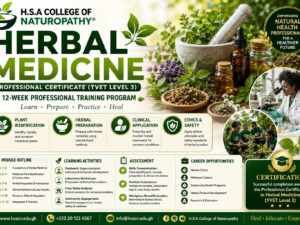
Build a strong foundation in naturopathic care with a 12 week certificate designed for Ghana. Learn core principles, therapeutic order, ...
Show more

- Description
- Curriculum
- FAQ
- Notice
- Reviews
- Grade

Program Overview
This 12‑week certificate builds a solid foundation in naturopathic principles and safe, ethical practice. Learners integrate theory with hands‑on skills to conduct holistic assessments, develop preventive health plans, and apply core modalities—herbal medicine, nutrition, hydrotherapy, and lifestyle counseling—within Ghana’s regulatory and cultural context.
The curriculum blends classroom learning, skills labs, supervised practice, and community engagement. By completion, graduates will competently gather client histories, identify red flags, formulate wellness strategies, and collaborate within multidisciplinary health settings.
Units / Modules and Key Activities
- Weeks 1–2: Foundations of Naturopathy
- Core principles, therapeutic order, scope of practice, referral pathways.
- Holistic intake: history taking, vitals, basic assessment tools, red‑flag recognition.
- Activity: Simulated intakes; build an intake template aligned to Ghanaian practice.
- Weeks 3–4: Herbal Medicine Basics
- Botanical ID, preparation methods (infusions, decoctions, tinctures, poultices).
- Safety, dosage, contraindications, herb–drug interactions.
- Activity: Create a mini‑herbarium; formulate a basic herbal preparation for a case.
- Weeks 5–6: Holistic Nutrition
- Dietary assessment, macronutrients/micronutrients, functional foods.
- Preventive strategies for common conditions; culturally relevant meal planning.
- Activity: 24‑hour recall analysis; develop a two‑week nutrition plan.
- Weeks 7–8: Hydrotherapy & Physical Medicine
- Indications/contraindications for water‑based therapies and basic massage.
- Hygiene, safety, and documentation.
- Activity: Supervised hydrotherapy applications; SOAP note practice.
- Weeks 9–10: Lifestyle Counseling
- Behavior change, stress management, sleep hygiene, exercise prescription.
- Motivational interviewing and communication skills.
- Activity: Role‑play counseling sessions with feedback and reflection logs.
- Weeks 11–12: Ethics, Regulation & Supervised Practice
- Professional ethics, consent, confidentiality, documentation standards.
- Overview of Ghanaian health regulations and interprofessional collaboration.
- Activity: Internship in clinics/community settings; workplace‑based evaluation.
Learning Activities
- Supervised assessments: patient intake, vitals, holistic evaluation.
- Practical workshops: herbal preparations, nutrition planning, hydrotherapy techniques.
- Case studies: evidence‑informed care plans with safety and referral considerations.
- Role‑plays and simulations: counseling, ethics, and communication.
- Community engagement: wellness education or screening events (where available).
Delivery and Time Commitment
- Contact: 4 hours/week (2h live online seminar; 2h on‑campus lab/practicum) = 48 hours.
- Independent study: recommended 3–4 hours/week for readings, reflection, and portfolio.
Assessment
- Quizzes and short assignments (foundations, safety, ethics).
- Skills checklists/OSCEs (intake, herbal prep, hydrotherapy techniques).
- Case study portfolio with care plans and reflective journals.
- Workplace‑based assessment during supervised practice.
Completion Requirements
- Minimum 80% attendance in contact sessions.
- Pass all safety and ethics assessments.
- Competent rating in practical OSCEs and supervised practice.
- Submission of complete case portfolio.
Graduate Outcomes
- Apply naturopathic principles to conduct safe, client‑centered assessments.
- Design preventive, culturally relevant nutrition and lifestyle plans.
- Prepare and advise on basic herbal and hydrotherapy modalities safely.
- Practice ethically within Ghanaian regulations and refer appropriately.
-
1
 Module 1: Foundations of General Naturopathy
What Is Naturopathy?
Naturopathy = A holistic system of medicine that emphasizes:
-
Natural therapies
-
Prevention
-
Individualized care
💡 Key point: Naturopathy is not just "alternative medicine" — it's a distinct medical philosophy with codified principles that guide clinical practice.
-
-
2
 Weekly self-quiz for Module 1 of General Naturopathy.
 -
3
Module 1.2: Determinants of Health & Causes of Disease in Naturopathy
-
4
Weekly self-quiz for Module 1 Determinants of Health and Disease
-
5
Module 1.3: Principles of Healing & The Therapeutic Order
-
6
Weekly self-quiz for Module 1 Principles of Healing and Therapeutic Order
-
7
Module 1.4: Scope of Naturopathy & Core Modalities
-
8
Weekly self-quiz for Module 1 Scope and Modalities of Naturopath
-
9
Final Quiz – Module 1
-
10
Unit 1 – The Digestive System
-
11
Quiz
-
12
Unit 2. The Liver and Detoxification
-
13
Quiz
-
14
Unit 3 – The Kidneys and Elimination
-
15
Quiz
-
16
Unit 4 – The Lungs and Respiration
-
17
Quiz
-
18
Unit 5 – The Skin and Elimination
-
19
Quiz
-
20
Unit 6 – The Nervous System and Elimination
-
21
Quiz
-
22
Unit 7 – The Circulatory System and Elimination
-
23
Quiz
-
24
Unit 8 – The Endocrine System and Elimination
-
25
Quiz
-
26
Unit 9 – The Lymphatic System and Elimination
-
27
Quiz
-
28
Final Quiz f or Module 2
-
38
Unit 1: Foundations of Nutrition in Naturopathy
-
39
Quiz
-
40
Unit 2: Therapeutic Diets in Naturopathy
-
41
Quiz
-
42
Unit 3: Dietary Assessment in Naturopathy
-
43
Quiz
-
44
Unit 4: Clinical Nutrition Applications in Naturopathy
-
45
Quiz
-
46
Unit 5: Integration of Nutrition into Holistic Practice
-
47
Quiz
-
48
Case Study Unit 5
Case Study: Chronic Fatigue & Stress
-
49
Unit 6 – Advanced Clinical Nutrition Strategies
-
50
Quiz
-
51
Unit 7: Physical Activity & Lifestyle Nutrition in Naturopathy
-
52
Case Study Unit 7
-
53
Quiz
-
54
Unit 8: Preventive Nutrition in Naturopathy
-
55
Quiz
-
56
Unit 9: Diagnostic Skills & Phytochemistry in General Naturopathy
-
57
Final Quiz Module 4
-
58
Unit 1: Yoga Philosophy & Meditation in Naturopathy
-
59
Quiz
-
60
Unit 2: Applied Yoga Therapy in Naturopathy
MODULE 5: GENERAL NATUROPATHY
UNIT 2: APPLIED YOGA THERAPY IN NATUROPATHY
Full Lesson Notes
1. Introduction
Applied yoga therapy involves the careful use of selected yoga practices as part of an individualized wellness and supportive care programme.
Unlike a general yoga class, applied yoga therapy requires the practitioner to consider the individual's:
-
Age
-
Physical condition
-
Fitness level
-
Mobility
-
Previous injuries
-
Current symptoms
-
Medical conditions
-
Stress level
-
Lifestyle
-
Personal goals
-
Cultural and personal preferences
The practitioner then selects appropriate movement, breathing, relaxation, and meditation practices.
Yoga therapy should not be understood as a replacement for medical diagnosis or treatment. It may complement appropriate healthcare and lifestyle interventions.
For example, a person experiencing stress may benefit from gentle movement, slow breathing, and mindfulness. A person with back discomfort may require a carefully modified movement programme rather than advanced yoga postures.
The practitioner must therefore prioritize individual assessment, safety, gradual progression, and appropriate referral.
2. Learning Objectives
By the end of this unit, the learner should be able to:
-
Explain the principles of applied yoga therapy.
-
Explain why yoga therapy must be individualized.
-
Assess basic client needs before selecting yoga practices.
-
Explain preventive and restorative applications of yoga.
-
Demonstrate selected therapeutic yoga postures safely.
-
Explain the appropriate use of Bhujangasana.
-
Explain the appropriate use of Shavasana.
-
Explain the appropriate use of Pawanmuktasana.
-
Explain the appropriate use of Tadasana.
-
Demonstrate selected pranayama techniques safely.
-
Explain Anulom Vilom.
-
Explain Bhramari.
-
Explain the precautions associated with Kapalabhati.
-
Demonstrate basic mindfulness meditation.
-
Explain guided visualization.
-
Explain mantra meditation.
-
Integrate yoga practices with nutrition and lifestyle education.
-
Explain how yoga may complement hydrotherapy and massage.
-
Develop simple, individualized yoga and relaxation programmes.
-
Recognize situations requiring referral to an appropriate healthcare professional.
3. Core Principles of Applied Yoga Therapy
3.1 Individualization
One of the most important principles of yoga therapy is that there is no single routine suitable for everyone.
A practice appropriate for a healthy young adult may not be appropriate for:
-
An older adult
-
A pregnant woman
-
Someone recovering from surgery
-
A person with severe back pain
-
Someone with balance problems
-
A person with cardiovascular disease
-
Someone with an acute injury
Before recommending a practice, the practitioner should consider the individual's needs and limitations.
Important Assessment Areas
The practitioner should consider:
-
Age
-
General fitness
-
Mobility
-
Existing medical conditions
-
Previous injuries
-
Current symptoms
-
Medication considerations
-
Stress level
-
Sleep pattern
-
Physical goals
-
Emotional wellbeing
-
Previous experience with yoga
4. Assessment Before Practice
Before beginning an applied yoga programme, the practitioner should establish a basic understanding of the client.
Useful questions include:
-
What is your main reason for seeking yoga therapy?
-
Do you experience pain?
-
Have you had any recent injuries or surgery?
-
Are you currently receiving medical treatment?
-
Are you taking prescribed medication?
-
Have you practised yoga before?
-
Are there movements you find difficult?
-
Do you experience dizziness or shortness of breath?
-
What level of physical activity do you normally perform?
-
What are your goals?
The practitioner should document relevant information and refer when the situation falls outside their competence.
5. Preventive and Restorative Applications
5.1 Preventive Lifestyle Support
Yoga may be incorporated into a healthy lifestyle programme to encourage:
-
Regular movement
-
Flexibility
-
Balance
-
Body awareness
-
Stress management
-
Relaxation
-
Healthy routines
It should not be described as guaranteeing prevention of disease.
Disease prevention also depends on appropriate nutrition, physical activity, sleep, healthcare, screening, vaccination where applicable, and other evidence-based measures.
5.2 Restorative Support
Gentle yoga and relaxation may be incorporated into recovery programmes when appropriate.
Examples include:
-
Gentle movement after periods of inactivity
-
Relaxation following stressful periods
-
Gradual mobility exercises
-
Breathing and mindfulness
-
Body-awareness practices
However, rehabilitation following serious injury, surgery, neurological conditions, or significant musculoskeletal problems should be coordinated with qualified healthcare professionals where appropriate.
6. Physical and Mental-Emotional Considerations
Applied yoga therapy can consider both physical and psychological wellbeing.
Physical Considerations
These may include:
-
Stiffness
-
Reduced mobility
-
Poor posture
-
Muscle tension
-
Reduced balance
-
General physical inactivity
Mental-Emotional Considerations
These may include:
-
Stress
-
Difficulty relaxing
-
Poor concentration
-
Emotional tension
-
Sleep difficulties
-
Feelings of being overwhelmed
Yoga and meditation can provide supportive practices, but they should not be used to independently diagnose or treat mental health disorders.
7. Therapeutic Asanas
7.1 Bhujangasana – Cobra Pose
Bhujangasana is a gentle spinal extension posture when performed correctly.
Potential Uses
It may be incorporated to support:
-
Spinal mobility
-
Chest and shoulder opening
-
Body awareness
-
Gentle back strengthening
Traditional yoga systems may associate this posture with digestive benefits. For professional practice, students should avoid claiming that the posture directly treats digestive disease.
How to Perform
-
Lie face down on a comfortable surface.
-
Place the hands near the shoulders.
-
Keep the legs comfortably extended.
-
Gently press into the floor.
-
Lift the chest only as far as comfortable.
-
Keep the shoulders relaxed.
-
Avoid forcing the lower back.
-
Breathe normally.
-
Hold briefly.
-
Slowly lower the body.
Safety
Stop if there is pain, numbness, dizziness, or other concerning symptoms.
Extra caution may be required for people with:
-
Significant back problems
-
Recent abdominal or spinal surgery
-
Acute injury
-
Pregnancy
8. Shavasana – Corpse Pose
Shavasana is a relaxation posture performed while lying comfortably on the back.
It can be used at the end of a yoga session.
Potential Benefits
It may support:
-
Physical relaxation
-
Awareness of breathing
-
Reduction of muscular tension
-
Mental relaxation
-
Transition into meditation
How to Perform
-
Lie comfortably on your back.
-
Allow the legs to relax.
-
Place the arms comfortably beside the body.
-
Close the eyes if comfortable.
-
Observe natural breathing.
-
Relax the face, shoulders, hands, abdomen, and legs.
-
Remain still for approximately 5–15 minutes.
-
Slowly return to normal activity.
A person who is uncomfortable lying flat may use a seated or supported relaxation position.
9. Pawanmuktasana – Wind-Relieving Pose
Pawanmuktasana involves bringing one or both knees toward the chest.
It is traditionally associated with digestive comfort.
From a modern perspective, it can also be viewed as a gentle movement involving the hips, lower back, and trunk.
How to Perform
-
Lie comfortably on your back.
-
Keep the legs extended.
-
Bend one knee.
-
Bring the knee gently toward the chest.
-
Hold it comfortably with the hands.
-
Breathe naturally.
-
Release slowly.
-
Repeat with the other leg.
-
If appropriate, bring both knees toward the chest.
Safety
Avoid forcing the knees toward the chest.
Modify or avoid the posture when necessary for:
-
Recent abdominal surgery
-
Significant hip or knee problems
-
Severe back pain
-
Pregnancy, particularly later pregnancy
10. Tadasana – Mountain Pose
Tadasana is a standing posture emphasizing alignment, balance, and body awareness.
How to Perform
-
Stand with the feet comfortably positioned.
-
Distribute weight evenly.
-
Keep the knees relaxed.
-
Allow the pelvis to remain neutral.
-
Relax the shoulders.
-
Keep the head balanced.
-
Look forward or use a soft gaze.
-
Breathe naturally.
-
Maintain the position for a comfortable period.
Potential Benefits
Tadasana can help develop:
-
Postural awareness
-
Balance
-
Body awareness
-
Standing stability
-
Preparation for other standing postures
A person with poor balance should practise near a stable support.
11. Pranayama Techniques
Pranayama refers to breathing practices within yoga traditions.
Breathing practices should be introduced gradually.
Students should understand that statements such as "balancing energy channels" belong to traditional yoga frameworks and should not be presented as established biomedical mechanisms.
Breathing practices may nevertheless be useful for:
-
Attention
-
Relaxation
-
Breath awareness
-
Stress management
-
Preparation for meditation
12. Anulom Vilom – Alternate-Nostril Breathing
Anulom Vilom is traditionally practised by alternating breathing through the nostrils.
Basic Method
-
Sit comfortably.
-
Keep the spine comfortably upright.
-
Relax the shoulders.
-
Close one nostril gently.
-
Inhale through the other nostril.
-
Change sides.
-
Exhale through the opposite nostril.
-
Continue slowly.
-
Avoid forcing the breath.
Beginners may practise for a few minutes before gradually increasing duration.
Potential Uses
It may support:
-
Calm breathing
-
Attention
-
Relaxation
-
Preparation for meditation
Students should not claim that it literally balances the left and right sides of the brain or treats disease.
13. Kapalabhati – Skull-Shining Breath
Kapalabhati is a more vigorous traditional breathing practice involving active exhalations.
Because it is relatively forceful, it should not be treated as a simple beginner breathing exercise.
Basic Description
The practitioner performs repeated active exhalations while inhalation occurs more passively.
Students should learn the technique under appropriate supervision.
Safety
Avoid or seek appropriate professional guidance where there are relevant conditions such as:
-
Uncontrolled high blood pressure
-
Significant cardiovascular disease
-
Pregnancy
-
Recent abdominal surgery
-
Significant respiratory problems
-
Conditions where forceful breathing is unsuitable
Do not encourage prolonged breath retention or excessive repetition.
Important Note
Kapalabhati should not be described as "detoxifying the lungs." The lungs already have natural mechanisms for gas exchange and clearance of respiratory secretions.
14. Bhramari – Bee Breath
Bhramari involves making a gentle humming sound during exhalation.
How to Perform
-
Sit comfortably.
-
Relax the face and shoulders.
-
Take a comfortable breath in.
-
Exhale slowly while producing a gentle humming sound.
-
Notice the vibration and sound.
-
Repeat several times.
The ears may be gently covered according to the traditional technique, but this is optional for beginners.
Potential Uses
Bhramari may support:
-
Relaxation
-
Breath awareness
-
Concentration
-
Stress management
It should not be presented as a guaranteed treatment for anxiety or other medical conditions.
15. Meditation Practices
15.1 Mindfulness Meditation
Mindfulness involves paying attention to present-moment experiences without immediately judging them.
How to Practise
-
Sit comfortably.
-
Keep the spine naturally upright.
-
Close the eyes or use a soft gaze.
-
Bring attention to breathing.
-
Notice thoughts when they arise.
-
Do not struggle with the thoughts.
-
Return attention to the breath.
-
Continue for approximately 5–20 minutes.
Potential Benefits
Mindfulness may support:
-
Stress management
-
Self-awareness
-
Attention
-
Emotional regulation
-
Relaxation
16. Guided Visualization
Guided visualization involves using mental imagery to encourage relaxation, focus, or positive coping.
Traditional naturopathic teaching may refer to this as "healing meditation."
For professional practice, it is better to explain that visualization can support relaxation and coping rather than claim that imagining cells regenerating directly causes physical healing.
Example
The learner may imagine:
-
A peaceful natural environment
-
Calm breathing
-
Warm sunlight
-
A safe and comfortable place
-
Completing a meaningful personal goal
Important Principle
Visualization should complement appropriate treatment rather than replace it.
17. Mantra Meditation
Mantra meditation involves repeating a word, phrase, or sound to provide a stable focus for attention.
Examples from yoga traditions include:
-
Om
-
So-Ham
A client may also use a personally meaningful neutral phrase if appropriate.
How to Practise
-
Sit comfortably.
-
Choose a suitable mantra.
-
Repeat it silently or aloud.
-
Maintain gentle attention.
-
When distracted, return to the mantra.
-
Continue for several minutes.
Potential Benefits
It may support:
-
Concentration
-
Relaxation
-
Attention
-
Personal reflection
Spiritual interpretations should be presented respectfully and according to the individual's beliefs.
18. Applied Yoga and Nutrition
Yoga can complement nutrition and lifestyle education.
For example, a client may combine:
-
Regular physical activity
-
Balanced meals
-
Mindful eating
-
Adequate hydration
-
Appropriate sleep
-
Stress management
Mindfulness can help a person recognize eating patterns such as:
-
Eating rapidly
-
Eating while distracted
-
Eating in response to stress
-
Skipping meals
-
Eating late at night
19. Ghanaian Application: Nutrition and Lifestyle
Consider a client in Kumasi who spends most of the day working at a desk and frequently eats large meals late at night.
A supportive lifestyle programme could include:
-
Regular meal timing
-
More vegetables and fruits
-
Appropriate portion awareness
-
Regular walking
-
Short workplace stretching
-
Evening relaxation
-
Mindful eating
-
Consistent sleep routine
Yoga should complement, rather than replace, appropriate nutrition counselling.
20. Applied Yoga and Metabolic Health
The original material associates yoga with conditions such as diabetes and obesity.
Students should understand that yoga may contribute to overall lifestyle management through physical activity, stress management, and healthy behaviour.
However, yoga should not be presented as a replacement for:
-
Prescribed diabetes medication
-
Blood glucose monitoring
-
Medical assessment
-
Appropriate nutrition care
-
Weight-management support
Example
A client with diabetes may be encouraged to engage in an appropriate physical activity programme alongside:
-
Their prescribed treatment
-
Appropriate nutrition
-
Regular monitoring
-
Stress management
-
Adequate sleep
Any exercise programme should take the person's health status into account.
21. Applied Yoga and Hydrotherapy
Yoga and meditation may be combined with hydrotherapy as supportive relaxation practices.
For example:
Warm water relaxation + gentle breathing + mindfulness
may help create a calming experience.
Hydrotherapy should nevertheless be applied with appropriate safety precautions.
Practitioners should consider:
-
Water temperature
-
Duration
-
Client comfort
-
Cardiovascular status
-
Skin conditions
-
Pregnancy
-
Sensory problems
-
Risk of dizziness or falls
22. Applied Yoga and Massage
Gentle movement may be used before or after massage depending on the individual's needs.
For example:
Before Massage
Gentle stretching and breathing may help the client become aware of areas of tension.
After Massage
Relaxation and slow breathing may provide a quiet transition before returning to normal activity.
Yoga should not be used to force muscles or joints immediately before deep massage.
23. Condition-Based Yoga: Important Clinical Principle
Yoga therapy should not be prescribed solely because a person has a diagnostic label.
For example, two people with "back pain" may have completely different causes and limitations.
One person may have mild muscular tension.
Another may have:
-
Disc problems
-
Neurological symptoms
-
Recent injury
-
Fracture
-
Infection
-
Post-surgical limitations
Therefore, the practitioner should assess the individual and refer appropriately before recommending therapeutic exercises.
24. Example: Stress and Anxiety
A person experiencing ordinary day-to-day stress may benefit from a gentle programme involving:
-
Tadasana
-
Gentle stretching
-
Shavasana
-
Comfortable breathing
-
Bhramari
-
Mindfulness
A person with severe anxiety, panic attacks, trauma symptoms, or significant depression should receive appropriate mental health assessment and support.
Yoga may be complementary, not a substitute for professional care.
25. Example: Back Discomfort
For mild, non-specific discomfort, a carefully modified programme may include:
-
Tadasana
-
Gentle mobility
-
Appropriate stretching
-
Relaxation
-
Breathing
However, referral is important when there are warning signs such as:
-
Severe or worsening pain
-
Weakness
-
Numbness
-
Loss of bladder or bowel control
-
Significant trauma
-
Fever
-
Unexplained weight loss
26. Example: High Blood Pressure
A person with high blood pressure should not simply be given a standard yoga programme.
A suitable programme may emphasize:
-
Gentle movement
-
Relaxation
-
Mindfulness
-
Comfortable breathing
Forceful breathing practices and highly strenuous or prolonged practices may not be appropriate.
The person should continue appropriate medical monitoring and prescribed treatment.
27. Example: Sleep Difficulties
For mild lifestyle-related sleep difficulties, an evening routine could include:
-
Gentle stretching.
-
Comfortable breathing.
-
Savasana.
-
Body scan.
-
Mindfulness.
-
Reduced evening screen exposure.
-
Regular bedtime.
Persistent or severe insomnia should be professionally assessed.
28. Practical Activity 1: Therapeutic Asana Demonstration
Objective
Demonstrate four basic postures safely.
Students Should Practise
-
Bhujangasana
-
Shavasana
-
Pawanmuktasana
-
Tadasana
Procedure
-
Prepare a clean practice area.
-
Check the learner's physical condition.
-
Warm up gently.
-
Demonstrate each posture.
-
Practise slowly.
-
Observe breathing.
-
Identify modifications.
-
Record difficulties.
Assessment
The student should demonstrate:
-
Correct positioning
-
Controlled movement
-
Appropriate breathing
-
Safe transitions
-
Appropriate modifications
29. Practical Activity 2: Pranayama Practice
Students should practise:
-
Anulom Vilom
-
Bhramari
Kapalabhati should only be introduced under appropriate instruction and with attention to safety.
Students should record:
-
Duration
-
Comfort
-
Breathing quality
-
Concentration
-
Physical sensations
-
Any difficulty
30. Practical Activity 3: Mindfulness Practice
Duration
5–10 minutes.
Procedure
-
Sit comfortably.
-
Focus on natural breathing.
-
Observe physical sensations.
-
Notice thoughts.
-
Return attention to the breath.
-
Remain non-judgmental.
-
Finish slowly.
Reflection
Write:
-
What distracted you?
-
What did you notice?
-
Did your breathing change?
-
How did you feel afterward?
-
What could improve your next practice?
31. Practical Activity 4: Client Assessment Exercise
Work in pairs.
One student acts as the client and the other as the practitioner.
The practitioner should ask about:
-
Age
-
Activity level
-
Main goal
-
Pain
-
Injury
-
Medical conditions
-
Medication
-
Previous yoga experience
-
Stress
-
Sleep
-
Physical limitations
The practitioner then develops a simple, low-risk introductory programme.
32. Practical Activity 5: Ghanaian Case Study
Case
Kwame is a 42-year-old office worker in Accra. He spends approximately eight hours a day sitting at a computer. He reports occasional lower-back discomfort, poor sleep, and high work-related stress.
He wants to start yoga because a friend told him that yoga can "cure back pain and remove toxins."
Student Tasks
-
Identify the claims that require correction.
-
Identify the information that should be obtained before recommending exercises.
-
Select appropriate beginner practices.
-
Identify practices that should be avoided until further assessment.
-
Develop a 15-minute introductory routine.
-
Explain when referral may be necessary.
-
Explain why yoga should complement rather than replace healthcare.
33. Sample 15-Minute Beginner Programme
First 2 Minutes
Comfortable breathing and body awareness.
Minutes 3–5
Tadasana and gentle standing movements.
Minutes 6–8
Gentle mobility appropriate to the individual.
Minutes 9–11
Simple relaxation movement or modified Pawanmuktasana where appropriate.
Minutes 12–15
Shavasana and mindfulness.
The routine should be modified according to the individual's health status.
34. Learning Activities
Students should complete:
Lectures and Reading
Study the principles and applications of yoga therapy.
Practical Sessions
Practise selected asanas, breathing, and meditation.
Case Studies
Apply principles to realistic client situations.
Daily Practice Logs
Record personal practice and observations.
Peer Teaching
Teach one safe technique to another student.
Written Assessment
Explain principles, benefits, limitations, and safety.
Practical Assessment
Demonstrate selected practices safely.
35. Safety and Professional Boundaries
A naturopathic practitioner should never assume that a yoga posture is safe simply because it is described as "natural."
Potential risks include:
-
Falls
-
Muscle strain
-
Joint injury
-
Back injury
-
Dizziness
-
Breathing difficulty
-
Excessive fatigue
-
Aggravation of an existing condition
Practitioners should:
-
Start gradually.
-
Use modifications.
-
Avoid forcing movement.
-
Monitor client responses.
-
Stop when concerning symptoms occur.
-
Refer when appropriate.
36. Contraindications and Precautions
Students should understand that contraindications depend on the specific posture and the individual's condition.
Particular caution may be required with:
-
Pregnancy
-
Recent surgery
-
Severe back injury
-
Significant cardiovascular disease
-
Uncontrolled hypertension
-
Severe respiratory conditions
-
Acute illness
-
Balance disorders
-
Neurological conditions
-
Severe joint problems
When uncertain, seek guidance from an appropriately qualified healthcare professional.
37. Ethical Practice
Applied yoga therapy should be based on:
Informed Consent
Clients should understand what they are being asked to do.
Respect
The practitioner should respect personal, cultural, religious, and physical differences.
Autonomy
Clients should be allowed to refuse a practice.
Confidentiality
Client information should be kept private.
Competence
Practitioners should only teach techniques for which they have appropriate knowledge and training.
Honest Communication
Avoid statements such as:
-
"This posture will cure diabetes."
-
"This breathing technique removes toxins."
-
"This meditation will heal damaged cells."
-
"You no longer need your medication."
Instead, use responsible language such as:
-
"This may support relaxation."
-
"This may contribute to physical activity."
-
"This can complement your existing care."
-
"Please discuss changes to medication with your healthcare professional."
38. Ghanaian Cultural and Professional Context
Applied yoga therapy in Ghana should be culturally sensitive.
Clients may have different:
-
Religious beliefs
-
Cultural practices
-
Family expectations
-
Attitudes toward meditation
-
Understandings of traditional healing
-
Levels of familiarity with yoga
The practitioner should explain the practice clearly and allow the client to make an informed choice.
Yoga should not be forced into a religious framework for a client who does not want that approach.
39. Sample Practice Programme by Goal
For General Stress Management
-
Tadasana
-
Gentle stretching
-
Bhramari
-
Shavasana
-
Mindfulness
For General Mobility
-
Tadasana
-
Gentle standing movements
-
Appropriate stretching
-
Controlled breathing
-
Relaxation
For Digestive Comfort
-
Gentle movement
-
Pawanmuktasana where appropriate
-
Relaxation
-
Mindfulness
Persistent digestive symptoms should be medically assessed rather than treated solely with yoga.
For Sleep Support
-
Gentle stretching
-
Shavasana
-
Slow comfortable breathing
-
Body scan
-
Mindfulness
For General Wellness
-
Gentle movement
-
Balance practice
-
Breathing
-
Relaxation
-
Mindfulness
40. Learner Competency Checklist
Before completing this unit, the learner should be able to:
-
Explain applied yoga therapy.
-
Explain why yoga therapy is individualized.
-
Conduct a basic pre-practice assessment.
-
Identify physical limitations.
-
Identify situations requiring referral.
-
Explain preventive lifestyle applications.
-
Explain restorative applications.
-
Demonstrate Bhujangasana safely.
-
Demonstrate Shavasana safely.
-
Demonstrate Pawanmuktasana safely.
-
Demonstrate Tadasana safely.
-
Explain Anulom Vilom.
-
Demonstrate basic alternate-nostril breathing.
-
Explain Bhramari.
-
Demonstrate Bhramari safely.
-
Explain the precautions associated with Kapalabhati.
-
Explain mindfulness meditation.
-
Explain guided visualization.
-
Explain mantra meditation.
-
Integrate yoga with lifestyle and nutrition education.
-
Explain how yoga may complement hydrotherapy.
-
Explain how yoga may complement massage.
-
Develop a simple individualized practice.
-
Maintain a practice log.
-
Apply yoga principles to case studies.
-
Communicate safely and ethically with clients.
41. Quick Review Questions
-
What is applied yoga therapy?
-
Why should yoga therapy be individualized?
-
What factors should be assessed before recommending yoga?
-
What is the difference between general yoga practice and applied yoga therapy?
-
What is preventive lifestyle support?
-
What is restorative support?
-
How can yoga support physical wellbeing?
-
How can yoga support stress management?
-
What is Bhujangasana?
-
How is Bhujangasana performed?
-
What precautions should be considered with Bhujangasana?
-
What is Shavasana?
-
What are the purposes of Shavasana?
-
What is Pawanmuktasana?
-
How is Pawanmuktasana performed?
-
What is Tadasana?
-
How does Tadasana support body awareness?
-
What is pranayama?
-
What is Anulom Vilom?
-
What is Bhramari?
-
What precautions should be considered when teaching Kapalabhati?
-
What is mindfulness meditation?
-
What is guided visualization?
-
What is mantra meditation?
-
How can yoga complement nutrition education?
-
How can yoga complement hydrotherapy?
-
How can yoga complement massage?
-
Why should yoga not be presented as a cure for disease?
-
When should a practitioner refer a client?
-
Develop a safe introductory yoga programme for a client experiencing work-related stress.
42. Assignment
Individual Assignment: Develop an Applied Yoga Programme
Choose one hypothetical client:
-
Office worker experiencing stress
-
Student experiencing examination stress
-
Adult with sedentary lifestyle
-
Person experiencing mild general stiffness
-
Person seeking better relaxation before sleep
Prepare an individualized programme containing:
-
Initial assessment
-
Goals
-
Selected asanas
-
Breathing practice
-
Meditation
-
Relaxation
-
Duration
-
Frequency
-
Safety precautions
-
Referral considerations
-
Expected supportive outcomes
Do not claim that the programme cures or prevents a specific disease.
43. Practical Assessment
The learner should demonstrate:
Part A – Client Assessment
Conduct a short pre-practice assessment.
Part B – Asana
Demonstrate two selected postures safely.
Part C – Pranayama
Demonstrate one appropriate breathing technique.
Part D – Meditation
Guide a five-minute mindfulness session.
Part E – Clinical Reasoning
Explain why the selected practices are appropriate for the hypothetical client.
Part F – Safety
Identify at least three situations requiring modification, cessation, or referral.
44. Unit Summary
Applied yoga therapy involves the careful selection of yoga practices according to individual needs.
The major components include:
-
Therapeutic movement
-
Asanas
-
Pranayama
-
Relaxation
-
Meditation
-
Mindfulness
-
Lifestyle education
Important practices covered in this unit include:
Bhujangasana – gentle spinal extension and body awareness.
Shavasana – relaxation and recovery.
Pawanmuktasana – gentle hip and trunk movement traditionally associated with digestive comfort.
Tadasana – standing alignment, balance, and body awareness.
Anulom Vilom – traditional alternate-nostril breathing.
Bhramari – humming-based breathing practice.
Kapalabhati – a more vigorous traditional breathing practice requiring appropriate instruction and safety precautions.
Mindfulness – present-moment awareness.
Guided visualization – mental imagery used primarily for relaxation and coping.
Mantra meditation – focused attention using repeated words or sounds.
Applied yoga can complement nutrition, hydrotherapy, massage, exercise, sleep management, and other lifestyle practices.
The most important principle is that yoga therapy should be individualized, safe, ethical, and appropriately integrated with healthcare.
45. Key Takeaways
Remember:
-
Yoga therapy must be individualized.
-
Assessment should come before recommendation.
-
Begin with simple and appropriate practices.
-
Never force a client into a posture.
-
Breathing practices should be introduced gradually.
-
Vigorous breathing techniques require additional caution.
-
Meditation can support relaxation and self-awareness.
-
Visualization should not be presented as a guaranteed physical healing method.
-
Yoga may complement healthy nutrition and lifestyle practices.
-
Yoga should not replace prescribed medical treatment.
-
Clients with concerning symptoms should be referred.
-
Cultural and religious preferences should be respected.
-
Professional boundaries and informed consent are essential.
-
Good yoga therapy combines practical skill with safety, observation, communication, and responsible clinical reasoning.
-
-
61
Quiz
-
62
Unit 3: Yoga Therapy for Specific Conditions in Naturopathy
-
63
Quiz
-
64
Unit 4: Preventive Yoga & Holistic Lifestyle in Naturopathy
-
65
Quiz
-
66
Unit 5: Yoga for Rehabilitation & Recovery in Naturopathy
-
67
Quiz
-
68
Quiz Module 5
-
69
Introduction
-
70
Unit 1: Preparation of Participant in Naturopathy
-
71
Quiz
-
72
Unit 2: Preparation of Work Area in Naturopathy
-
73
Quiz
-
74
Unit 3: Digestive System in Naturopathy
-
75
Quiz
-
76
Unit 4: Urinary System in Naturopathy
-
77
Quiz
-
78
Unit 5: Respiratory System in Naturopathy
-
79
Quiz
-
80
Unit 6: Immune System in Naturopathy
Organs and cells involved in immunity
-
81
 Assignment
 -
82
Quiz Module 6
-
83
Unit 1 – Understanding Fatigue
-
84
Assignment
-
85
Unit 2: Naturopathic Diagnostics
-
86
Assignment
-
87
Unit 3 – Herbal and Nutritional Therapies
-
88
Assignment
-
89
Unit 4: Lifestyle and Mind‑Body Approaches
-
90
Assignment
-
91
Unit 5: Case Studies and Clinical Application
-
92
Assignment
-
93
Final Quiz for Module 7
-
94
Module 8 – Overview
Definition and principles of detoxification in naturopathy — what detoxification is and how it works
-
95
Unit 1: Foundations of Detoxification
In naturopathy, detox is seen as a restorative practice that supports the body's innate healing capacity — supports natural healing
-
96
Assignment
-
97
Unit 2: Liver and Digestive Detox
The liver is the body's primary detox organ — main detoxification organ
-
98
Assignment
-
99
Unit 3: Renal and Skin Pathways
Kidneys filter blood and remove water‑soluble wastes — urea, creatinine, excess salts — filter waste from blood
-
100
Assignment
-
101
Unit 4 – Respiratory Detoxification
The lungs are vital detox organs, eliminating carbon dioxide and volatile compounds — remove CO₂ and toxins
-
102
Assignment
-
103
Unit 5 – Clinical Detox Strategies
Detoxification must be tailored to each person's constitution, health status, and lifestyle — personalized
-
104
Assignment
-
105
Final Quiz – Module 8
-
106
Unit 1: Introduction to Mud Therapy
Mud Therapy is a naturopathic treatment that uses natural mud for healing and wellness — natural healing with mud
-
107
Assignment
-
108
Unit 2: Types of Mud and Preparation
Type Composition Therapeutic Properties Clay-based Mud Rich in silica and aluminum Excellent for detoxification and skin treatments Mineral-rich Mud Contains calcium, magnesium, and iron Improves circulation and reduces inflammation Peat Mud Derived from decomposed plant material Effective for rheumatic conditions and joint pain Volcanic Mud High in sulfur and trace elements Beneficial for skin disorders and detoxification -
109
Assignment
-
110
Unit 3: Applications of Mud Therapy
Provides essential minerals like magnesium, calcium, and sulfur to the body — nourishes with minerals
-
111
Assignment
-
112
Unit 4: Procedures and Techniques in Mud Therapy
Avoid in cases of severe infections, open wounds, or certain chronic illnesses without medical supervision — when NOT to use
-
113
Assignment
-
114
Unit 5: Integration with Other Therapies
Mud therapy is most effective when combined with other naturopathic practices — multi-therapy approach works best
-
115
Assignment
-
116
Final Quiz for Module 9
-
117
Unit 1: Introduction to Magneto Therapy
Magneto Therapy is a naturopathic treatment that uses magnets or magnetic fields to promote healing — healing with magnets
-
118
Assignment
-
119
Unit 2: Principles and Types of Magneto Therapy
The north and south poles of a magnet are believed to exert different physiological effects — poles have different effects
-
120
Assignment
-
121
Unit 3: Applications of Magneto Therapy
Magnets reduce inflammation and improve mobility — less inflammation, better movement
-
122
Assignment
-
123
Unit 4: Introduction to Chromotherapy
Chromotherapy is a naturopathic treatment that uses colors (light wavelengths) to balance energy and promote healing — healing with color/light
-
124
Assignment
-
125
Unit 5: Applications of Chromotherapy
Calm the nervous system and reduce stress hormones — soothing, stress reduction
-
126
Assignment
-
127
Unit 6: Integration of Magneto and Chromotherapy
Combining magneto therapy (energy fields) with chromotherapy (light and color) enhances overall healing — multi-therapy approach works better
-
128
Assignment
-
129
Final Quiz for Module 10
-
130
Unit 1: Introduction to Massage
Massage Therapy is a naturopathic technique involving systematic manipulation of soft tissues (muscles, tendons, ligaments) to promote healing — structured tissue manipulation
-
131
Assignment
-
132
Unit 2: Massage Techniques
Long, gliding strokes performed with palms or fingertips
-
133
Assignment
-
134
Unit 3: Introduction to Acupressure
Acupressure is a therapeutic technique that applies pressure to specific points on the body to stimulate energy flow and promote healing — pressure on points for healing
-
135
Assignment
-
136
Unit 4: Acupressure Techniques
Gentle to firm pressure applied with fingertips or thumbs
-
137
Assignment
-
138
Unit 5: Integration of Massage and Acupressure
Massage works on muscles and circulation, while acupressure stimulates energy points — massage = muscles/circulation; acupressure = energy points
-
139
Assignment
-
140
Final quiz module 11
-
141
Unit 1: Effective Communication
In naturopathy, effective communication builds trust, ensures accurate diagnosis, and enhances patient compliance — trust, diagnosis, compliance
-
142
Assignment
-
143
Unit 2: Empathy and Compassion
The ability to understand and share the feelings of another person — understanding & sharing feelings
-
144
Assignment
-
145
Unit 3: Professional Boundaries
They protect both the practitioner and the patient, ensuring ethical, respectful, and safe relationships — protect both parties, ethical/respectful/safe
-
146
Assignment
-
147
Unit 4: Conflict Resolution
Conflict resolution is the process of addressing disagreements constructively to reach a peaceful solution — constructive disagreement resolution
-
148
Assignment
-
149
Unit 5: Teamwork and Collaboration
Collaboration in healthcare means integrating knowledge and skills across disciplines to provide holistic patient care — integrate knowledge/skills across disciplines
-
150
Assignment
-
151
Final Quiz – Module 12
Build a solid foundation in naturopathic practice with a 12 week certificate designed for safe, ethical, culturally relevant care in Ghana. Learn to integrate theory with hands on skills to gather client histories, spot red flags, create preventive wellness plans, and apply herbal medicine, nutrition, hydrotherapy, and lifestyle counseling.
- Foundations: principles, scope, referral, holistic intake and vitals
- Herbal basics: identification, preparations, safety, interactions
- Holistic nutrition: assessment, meal planning for common conditions
- Hydrotherapy and physical medicine: indications, hygiene, documentation
- Lifestyle counseling: behavior change, stress, sleep, exercise
- Ethics and regulation: consent, confidentiality, supervised practice
Learning includes simulations, labs, assessments, case studies, and community engagement. Delivery is 4 contact hours weekly plus 3–4 hours independent study. Assessment uses quizzes, OSCEs, portfolios, and workplace evaluation.
Graduate ready to practice safely, collaborate across disciplines, and deliver preventive, client centered naturopathic care within Ghana.

Program: General Naturopathy – Professional Certificate
Duration: 12 weeks
Delivery Mode: Hybrid (on-campus + online)
Credit Load: 48 contact hours
Level: TVET Professional Level 3
Minimum education: TVET Level 2, Senior High School (SHS) completion, or equivalent foundation in basic sciences
Age 18+ and proficient in English (reading, writing, speaking)
Reliable internet access and a device for online components (laptop or smartphone)
Commitment to attend practical workshops and supervised practice (minimum 80% attendance)
Adherence to clinic safety protocols and professional ethics during supervised activities
Aspiring naturopathy and wellness practitioners seeking foundational skills
Community health workers, health aides, and nutrition assistants
Spa and wellness center staff, herbal retailers, and fitness coaches
Caregivers and individuals interested in holistic self-care and preventive health
Learners preparing for advanced study in naturopathy or complementary therapies